


Join thousands of fellow campervan travellers
Sign up for our Britz newsletter to receive inspirational travel content and awesome deals, and we'll send you a copy of our Ultimate RV guide!
Thanks
Please confirm subscription in your email.
Why do people go to Farewell Spit?
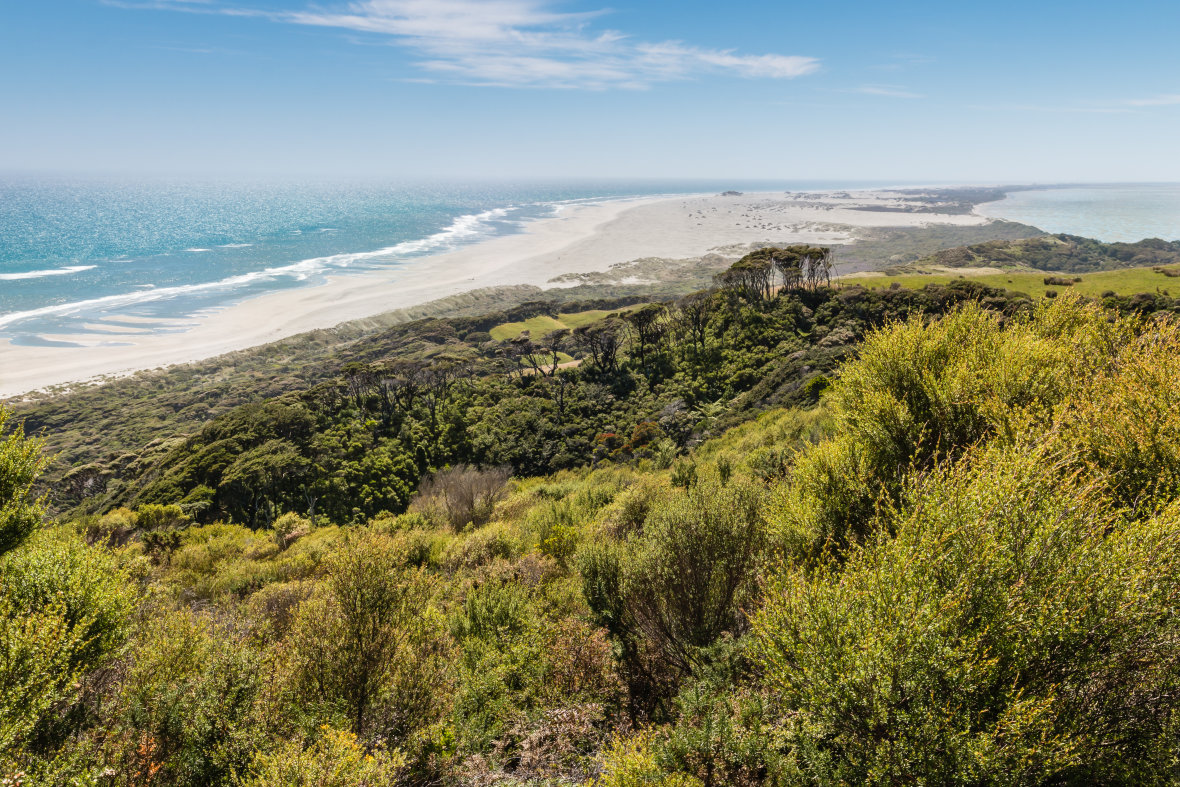
People visit Farewell Spit to see wild coastal landscapes, rare birdlife, and the sheer scale of this shifting sand formation. From Cape Farewell’s towering cliffs to the intertidal flats stretching into the distance, the area offers geology, wildlife and walking access all in one.
The Farewell Spit Nature Reserve is recognised as a Ramsar Wetland of International Importance and home to over 90 bird species, including migratory godwits/kuaka and oystercatchers. It's also the site of a historic lighthouse and wide tidal plains that transform with the light and wind.
While public access is restricted beyond Triangle Flat, the Pūponga Farm Park and base of the Spit are open year-round for walking and day visits. If you want to travel further, including to the Farewell Spit Lighthouse, you’ll need to join a DOC-licensed tour.
How long should I spend at Farewell Spit?
If you’re walking independently, allow 3–4 hours for the Farewell Spit Walk – a 12 km loop from Triangle Flat via Inner Beach and Ocean Beach. It’s a mostly flat track with dune views and bird-watching spots, but shorter return walks are possible if you’re short on time.
For a quick visit, Cape Farewell is only a few minutes’ walk from the road-end car park and offers sweeping views from the cliffs over the ocean. It’s a good option for a photo stop if you're passing through.
To go beyond Triangle Flat and reach the Farewell Spit Lighthouse, you’ll need to book a licensed tour. These trips typically last 6 hours and include commentary, dune crossings, and wetland viewing with experienced local guides.
Is Farewell Spit worth visiting?
Absolutely. It’s a standout stop on any ‘top of the South’ campervan itinerary, especially for those interested in:
-
Coastal geology and long dune systems
-
Seasonal bird migration (notably godwits and knots)
-
Walking access through farm park and beach trails
-
Rare access to a protected natural reserve
Farewell Spit also pairs well with nearby Wharariki Beach, the Pūponga Hilltop Track, and shorter walks in Pūponga Farm Park, making it an easy way to spend a full day exploring this corner of Golden Bay.
How to get to Farewell Spit
Farewell Spit is located near Pūponga, at the far end of Golden Bay, roughly 30 minutes north of Collingwood.
-
From Collingwood: Follow Collingwood–Pūponga Main Road to Wharariki Road, then turn onto Freeman Access Road for the Triangle Flat car park.
-
From Nelson: The drive takes approximately 3.5 hours via SH60 through Motueka and Takaka.
-
There is no public transport to this area – private vehicle or campervan is essential.
-
No vehicles or bikes are allowed on the Spit itself unless part of a permitted tour.
Best time to visit Farewell Spit
The best time to visit is between September and March/April, when wader birds are most active and weather conditions are more settled.
-
Spring and early summer align with bird migration, offering the best chance to see large flocks on the tidal flats.
-
The landscape is most photogenic in morning or late afternoon light, when the dunes and cliffs take on softer tones.
-
Try to plan your visit for mid to low tide, which makes beach sections easier to walk and improves bird-watching chances.
Weather conditions at Farewell Spit
Farewell Spit is highly exposed to wind, salt spray, and sun. Weather can change quickly, and the coastal environment demands preparation.
Expect:
-
Strong UV and glare – bring sunblock and sunglasses
-
Wind and sand movement – wear secure, layered clothing
-
Uneven or muddy track conditions – solid footwear recommended
DOC regulations prohibit camping, fires, dogs, and smoking within both the Nature Reserve and Pūponga Farm Park. Keep at least 20 metres away from any fur seals.
Best place to park your campervan at Farewell Spit
-
Triangle Flat car park (Farewell Spit Walk trailhead): Best option for walking access. Located via Freeman Access Road. Suitable for day parking, including larger vehicles. No overnight parking.
-
Cape Farewell car park (off Wharariki Road): Short walk to the lookout platform. Be aware the final 1 km of road is exposed gravel – drive cautiously, especially in windy conditions. Day use only.
For overnight parking, use established holiday parks in nearby Collingwood, Pōhara, or elsewhere in Golden Bay. Freedom camping is not permitted near the reserve or in surrounding car parks.
Must-see highlights and quick answers
Can I walk on Farewell Spit?
Yes, the base section is open to the public from Triangle Flat. The upper Spit requires a DOC concession or guided tour.
How long is the Farewell Spit Walk?
It’s a 12 km loop walk taking 3–4 hours, starting and ending at Triangle Flat. You can also opt for shorter walks.
Where do I see birds at Farewell Spit?
The Ramsar-listed wetlands support over 90 species. Peak viewing for migratory birds is from September to April.
Is Farewell Spit free?
Yes, access to the base area is free. The Farewell Spit Lighthouse and upper dune zones are only accessible by paid tour.
What are the walks nearby Farewell Spit?
-
Pūponga Hilltop Walk: 8 km one way via Pillar Point, 3–5 hour return loop
-
Cape Farewell Track: Short walk to lookout platform
-
Wharariki Beach: Another popular nearby stop with seal pups in summer
Road trips that pass through
Farewell Spit is easily worked into campervan journeys around the top of the South Island. These Britz routes pass through or nearby: