


Join thousands of fellow campervan travellers
Sign up for our Britz newsletter to receive inspirational travel content and awesome deals, and we'll send you a copy of our Ultimate RV guide!
Thanks
Please confirm subscription in your email.
Why do people go to Hokitika Gorge?
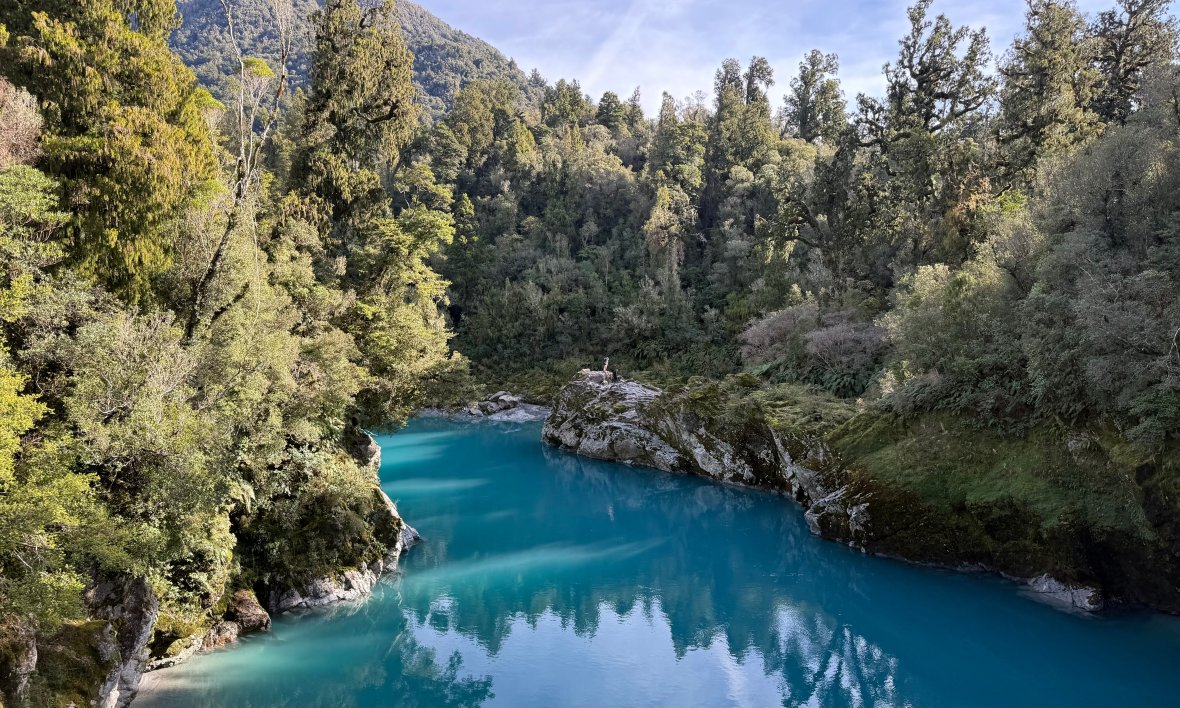
People visit Hokitika Gorge for the colour. The river’s vivid blue-green hue stands out against the white stone and surrounding bush, creating one of the most memorable natural scenes on the West Coast. It is a high-reward stop because you do not need a long hike to enjoy it, and the track makes it easy for a wide range of visitors to reach the main viewpoints.
It is also a very easy addition to a wider West Coast itinerary. If you are staying in Hokitika or passing through between Greymouth and Franz Josef, the gorge is close enough for a straightforward detour, but impressive enough to feel like a true highlight rather than just a quick roadside stop.
How long should I spend at Hokitika Gorge?
Allow around 1 to 1.5 hours for the loop track itself, with extra time for photos. If you are here for the views and a few photos, allow one hour. If you plan to linger at each lookout, wait for light, or simply sit and enjoy the scene, plan for 90 minutes to 2 hours. That extra time pays off on sunny days when the colour intensifies.
Many travellers pair the gorge with a relaxed morning or afternoon in Hokitika town, making this a half-day adventure door to door. If you are shooting photos, consider building in a buffer so you can return to a favourite viewpoint when the sun breaks through or the wind settles.
How to get to Hokitika Gorge
Hokitika Gorge sits about 33 kilometres east of Hokitika. From town, follow Kaniere Road toward Lake Kaniere, then continue on the Whitcombe Valley Road. The route is well signposted, and the final approach leads directly to the trailhead car park. Driving time is roughly 30 minutes from central Hokitika.
If you are travelling the West Coast by campervan, it is an easy detour from State Highway 6. From Greymouth, head south to Hokitika before turning inland, or from Franz Josef, head north to Hokitika and then east. The drive itself is part of the magic, passing farmland and forested foothills that hint at the Southern Alps beyond. Fuel and supplies are best sorted in Hokitika before you head to the gorge.
Best time to visit Hokitika Gorge
Hokitika Gorge dazzles year-round, but it is at its most vibrant on clear days when sunlight hits the river. Summer brings longer daylight and warmer temperatures, making it the most popular season. Midday light often makes the blue-green water pop on camera, though that is when crowds are highest.
For a quieter visit, aim for early morning or late afternoon. The colour can still be excellent when the sun is out, and the weather has been dry. After heavy rain, the river can run higher and browner, which softens the signature hue. If the weather is mixed, consider checking the forecast and timing your stop for a sunnier window. Cloudy conditions can still be beautiful, with moody tones over the rainforest and soft, even light for photography.
Weather in Hokitika Gorge
The West Coast has a temperate maritime climate. Summer days typically range from about 12-20°C, while winter averages sit around 5-12°C. Rain is common in all seasons, and the region sees high rainfall spread through the year, so be prepared for showers at any time.
Pack layers, a waterproof jacket and sturdy footwear, no matter when you visit. Humidity and shade from the surrounding bush can make the track feel cooler than town, so bring an extra layer. On hot days, the forest offers welcome relief. The river itself remains very cold year-round, a reminder that the water has its origins in the Southern Alps.
What to see and do at Hokitika Gorge
The Hokitika Gorge Walk is a short, scenic loop that strings together everything you have come to see. Within minutes of leaving the car park, you reach the first lookout across the gorge. From here, the track weaves along boardwalks and forest paths to suspension bridges that span the river.
The upper bridge is the showpiece at around 90 metres long, delivering high, dramatic views of the current and the pale rock walls below.
Several viewing platforms encourage you to pause and take it in from different angles. On calm days, the river can look mirror-like, reflecting the forest canopy and cliff edges.
A side path from a lower platform leads down to a small riverside beach where you can sit close to the water. Access to this beach or parts of the loop may occasionally be closed or rerouted for maintenance or safety, so check signs on the day. The water is icy, and the currents are swift, so this is a spot for admiring rather than entering.
While you are in the Hokitika area, take a moment to notice pounamu, or New Zealand jade. The Arahura and Hokitika rivers are famous for transporting this treasured stone downstream. In town, you can visit galleries, carvers and displays that tell the story of pounamu, adding cultural depth to your nature stop at the gorge.
Entry and facilities at Hokitika Gorge
There is no entry fee to visit Hokitika Gorge. The site sits within public conservation land, and the track is generally open to the public, although sections may be temporarily closed for maintenance, weather or safety. A donation box is often present near the entrance for those who wish to contribute to upkeep. Toilets are available at the trailhead car park. There are no food or drink vendors at the gorge, so bring water and snacks from Hokitika. Mobile coverage has improved at the gorge, but can still be patchy or absent in parts of the valley, which is another good reason to set logistics before you leave town. Rubbish bins are limited or not present, so plan to carry out everything you bring in.
Safety tips for visiting Hokitika Gorge
The Hokitika River is swift, deep and very cold. Swimming is strongly discouraged, and there have been incidents here in the past. Even if the surface looks calm near the edges, strong undercurrents and sudden drop-offs can make the water extremely dangerous. Enjoy it from the shore and the bridges.
Stay on the marked track and take care around lookouts where edges can be slippery, especially after rain. Supervise children closely near the platforms and anywhere close to the river. In summer, sandflies can be active in the bush and by the water. Bring repellent and consider wearing long sleeves and light trousers if you plan to linger.
Track and bridge conditions can change after storms or maintenance works. Check the signage at the trailhead on arrival and follow any instructions. Good footwear with grip makes the experience safer and more comfortable.
How long does the walk take?
The loop is around 2 kilometres with about 40 metres of gentle elevation gain. Allow 1-1.5 hours for the full loop as a general guide, especially if you plan to stop at viewpoints. Fit walkers often complete the circuit more quickly, and some visitors report 35-45 minutes when moving at a steady pace without long stops.
When you’re travelling by campervan and building a day around West Coast highlights, consider setting aside two to three hours for the return drive from Hokitika, the walk, and time for photos and a snack. Unhurried is the best pace for this place.
Best place to park your campervan at Hokitika Gorge
Parking could not be easier. A large free car park sits right at the trailhead on Whitcombe Valley Road, with clear signage as you approach. There is ample room for cars, campervans and caravans, and toilets are available. Treat this as day parking, and follow any on-site signs and instructions. There is no designated overnight parking or camping at the gorge car park.
Plan to base yourself in Hokitika for the night. For campervan stays, you will find holiday parks with powered sites and facilities. Hokitika’s Kiwi Holiday Park & Motels is a popular option, a short drive from town amenities and the beachfront. You can also check Westland District Council guidelines for responsible camping areas if you are travelling in a certified self-contained vehicle.
If you are planning a longer West Coast loop, a Britz campervan gives you the flexibility to time your visit with the best light and weather. Park up for the night in Hokitika, head to the gorge after breakfast, then continue south toward the glaciers or north toward Punakaiki at your own pace.
Ready to chase that turquoise glow and make the most of your South Island road trip? Plot Hokitika Gorge into your itinerary, pack a rain jacket just in case, and keep your camera handy. With a Britz campervan as your base, you can explore the West Coast’s big scenery and small-town charm in one effortless sweep.
FAQs and quick answers
-
How long is the walk around Hokitika Gorge?
The Hokitika Gorge Walk is a 2 kilometre loop, and DOC’s guide time is about 1 hour 30 minutes. -
Is Hokitika Gorge worth it?
Yes. It is one of the West Coast’s most accessible big-scenery stops, with dramatic blue water, suspension bridges and a short walk that delivers excellent views without a huge time commitment. -
Why is the Hokitika Gorge water so blue?
The colour comes from fine glacial sediment, often called glacial flour, suspended in the water. Light scatters off these particles and creates the gorge’s striking blue-green colour. -
Is it worth going to Hokitika Gorge in the rain?
Yes, but the experience is different. The gorge can still look beautiful and moody in wet weather, though after heavy rain the water is often higher and browner, so you may not see the vivid turquoise colour it is famous for.
Road trips that pass through
Northbound Scenic Sights Itinerary
Christchurch to Wanaka via the West Coast
Epic South Island Hidden Gems Road Trip