



Join thousands of fellow campervan travellers
Sign up for our Britz newsletter to receive inspirational travel content and awesome deals, and we'll send you a copy of our Ultimate RV guide!
Thanks
Please confirm subscription in your email.
Why do people go to Cape Byron Lighthouse?
The main drawcard of the Cape Byron Lighthouse is its unbeatable location. Visitors climb to the headland to enjoy 360-degree views that stretch from the hinterland to the open sea. This is one of the best spots on the east coast for wildlife spotting; dolphins are often seen riding the swell below, while humpback whales pass by during their annual migration (May to November).
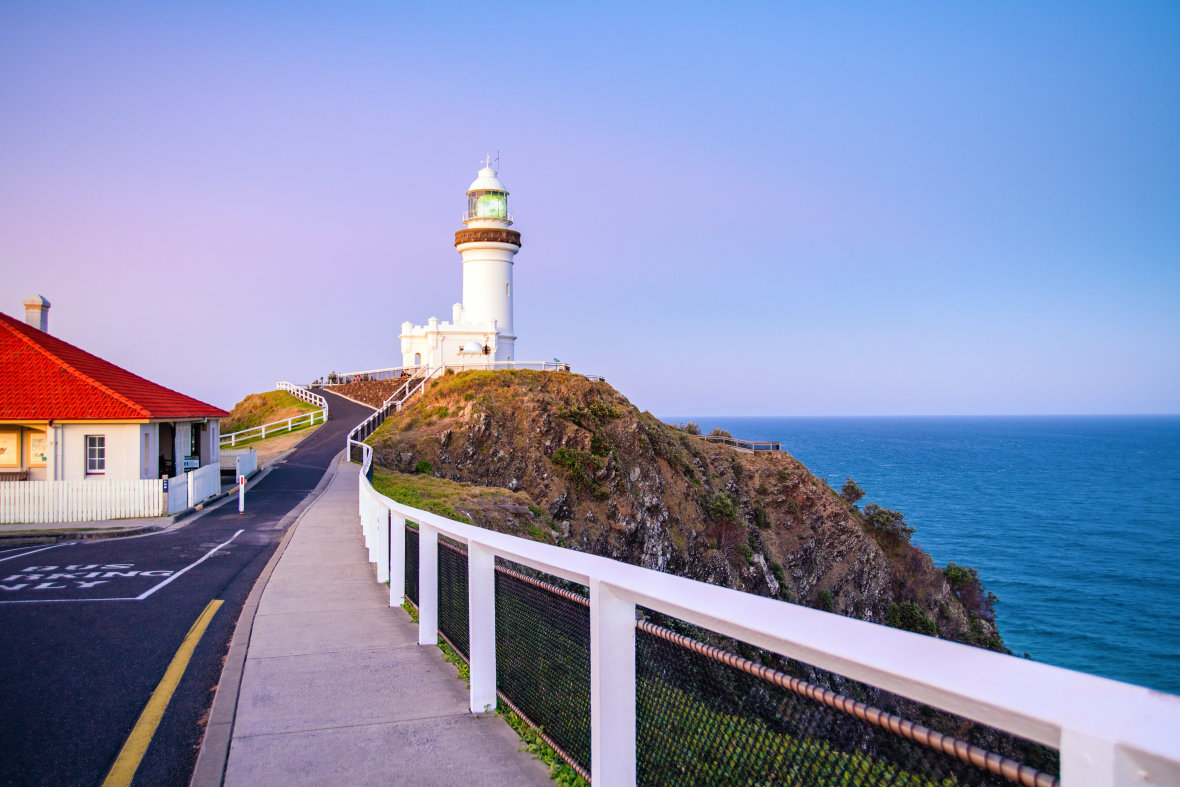
The lighthouse itself is worth taking a closer look at, too. Its heritage-listed design is a nod to early 20th-century architecture, and the 23-metre-high tower is a striking sight against the backdrop of endless ocean. The site is also home to a small maritime museum, which gives more context to its long-standing role in the region.
For many, the highlight is simply walking here. The Byron Bay lighthouse walk is one of the most scenic coastal walks on the NSW coast, winding along beaches, through rainforest, and up to the headland. And when the day comes to an end, locals and travellers alike gather here to watch the legendary Cape Byron Lighthouse sunset.
How long should I spend at Cape Byron Lighthouse?
If you’re short on time, you can see the Byron Bay lighthouse in as little as an hour, which is enough to stroll up to the main lookout, take some photos, and soak in the views. But most travellers allow 1–2 hours to walk one of the trails, explore the grounds, and perhaps grab a coffee at the nearby café.
If you want to go deeper, plan for 2–3 hours. This gives you time to combine the lighthouse with the Byron Bay lighthouse trail, spot marine life, and explore the smaller lookouts and beaches nearby, such as Lighthouse Beach at the base of the headland.
How to get to Cape Byron Lighthouse
From the Byron Bay town centre, the lighthouse is just a short 2 km drive or walk. Simply follow Lawson Street, which becomes Lighthouse Road, and you’ll arrive at the car park. If you’d rather stretch your legs, take the Byron Bay lighthouse walk, a loop trail that links several beaches and viewpoints before climbing up to the lighthouse itself.
From the Gold Coast, the drive takes about 1.5 hours (100 km). Head south on the M1 Pacific Motorway and exit toward Ewingsdale. From there, follow the signs into Byron Bay and up Lighthouse Road to the headland. It’s a scenic drive, with plenty of opportunities to stop for supplies or views along the way.
Best time to visit Cape Byron Lighthouse
Best time of year to visit: Honestly, you can’t go wrong. In winter, you get the bonus of whale watching, and spring is ideal for walking with mild weather and fewer crowds. Summer brings those long days perfect for swimming before or after your walk, although it does get busier. Autumn is the sweet spot for cooler evenings and warm, sunny days.
Best time of day to visit: If you can drag yourself out of bed, sunrise here is magic. Being the most easterly point in Australia means you’re literally among the first in the country to see the sun come up. Sunset is equally stunning, with the sky lighting up behind the mountains inland. Midday can be hot and crowded, so mornings and late afternoons are the best times to visit.
Weather at Cape Byron Lighthouse
Cape Byron enjoys a subtropical climate, meaning warm summers and mild winters. In summer (December–February), expect temperatures between 22–28 °C with high humidity and plenty of sunshine. Winters (June–August) are cooler, with daytime highs of 18–20 °C and crisp evenings – perfect for walking without the heat. Spring and autumn balance the two, offering comfortable mid-20s temperatures that are ideal for exploring the trails and lookouts.
Best place to park your campervan at Cape Byron Lighthouse
Parking at the actual lighthouse is tight, especially for bigger vehicles like campervans. There’s a bitumen car park at the top, but spaces are limited and fill up quickly on weekends or during holidays. A better option is to base yourself at one of the nearby holiday parks (Reflections Holiday Park or Ingenia Holidays Byron Bay are close by) and then either walk, cycle, or use local transport up to the headland. That way, you skip the parking stress and still get to enjoy the views.
Road trips that pass through