


Join thousands of fellow campervan travellers
Sign up for our Britz newsletter to receive inspirational travel content and awesome deals, and we'll send you a copy of our Ultimate RV guide!
Thanks
Please confirm subscription in your email.
Why do people go to the Noosa Everglades?
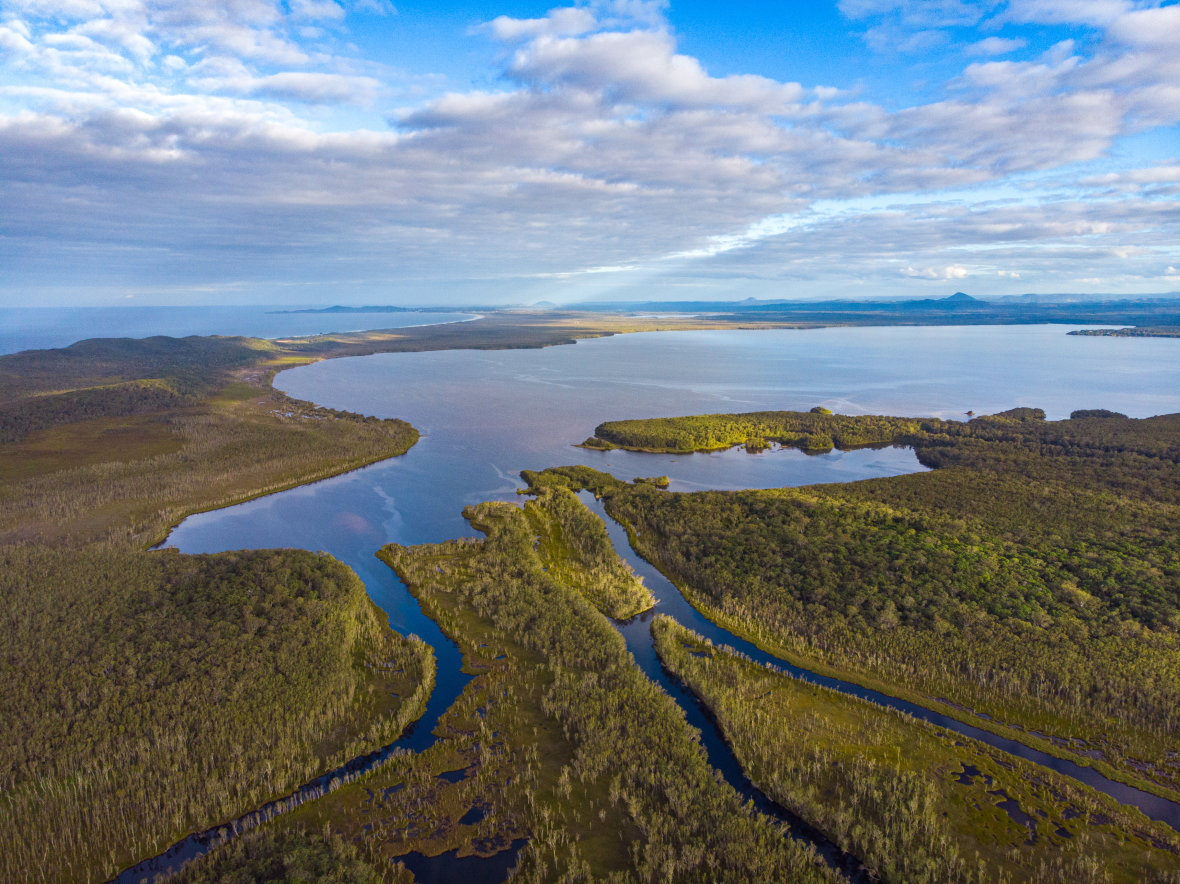
The draw of the Noosa Everglades is its sheer uniqueness. Few places on the planet offer this combination of untouched wilderness, rich biodiversity, and easy accessibility. Visitors often come for the chance to paddle or cruise through a waterway nicknamed the “River of Mirrors” thanks to the incredible reflections created by its tannin-stained waters.
Wildlife spotting is another highlight of the Noosa Everglades. Kayakers often find themselves sharing the space with turtles, egrets, and kingfishers, while eco-tours provide insights into the delicate balance of this UNESCO-listed habitat. For those who prefer to keep their feet dry, guided Noosa cruises offer a relaxed way to soak up the scenery. And if you want to stay overnight, you’ll find unique eco-friendly accommodation at Habitat Noosa Everglades eco camp, complete with glamping options and powered campervan sites.
How long should I spend at Noosa Everglades?
How long you stick around really depends on how deep you want to dive into the Everglades experience. A quick Noosa Everglades tour, such as a half-day kayak or river cruise, takes around 2.5 to 4 hours, giving you a good taste of the waterways and wildlife. But if you’re up for the full 23 km paddle or want to join a guided full-day adventure with lunch included, you’ll need closer to 5–6 hours.
Many travellers find that one day is enough, but those who love camping or photography often stretch their trip over two days to truly immerse themselves in the stillness of the area.
Can I stay overnight at Noosa Everglades?
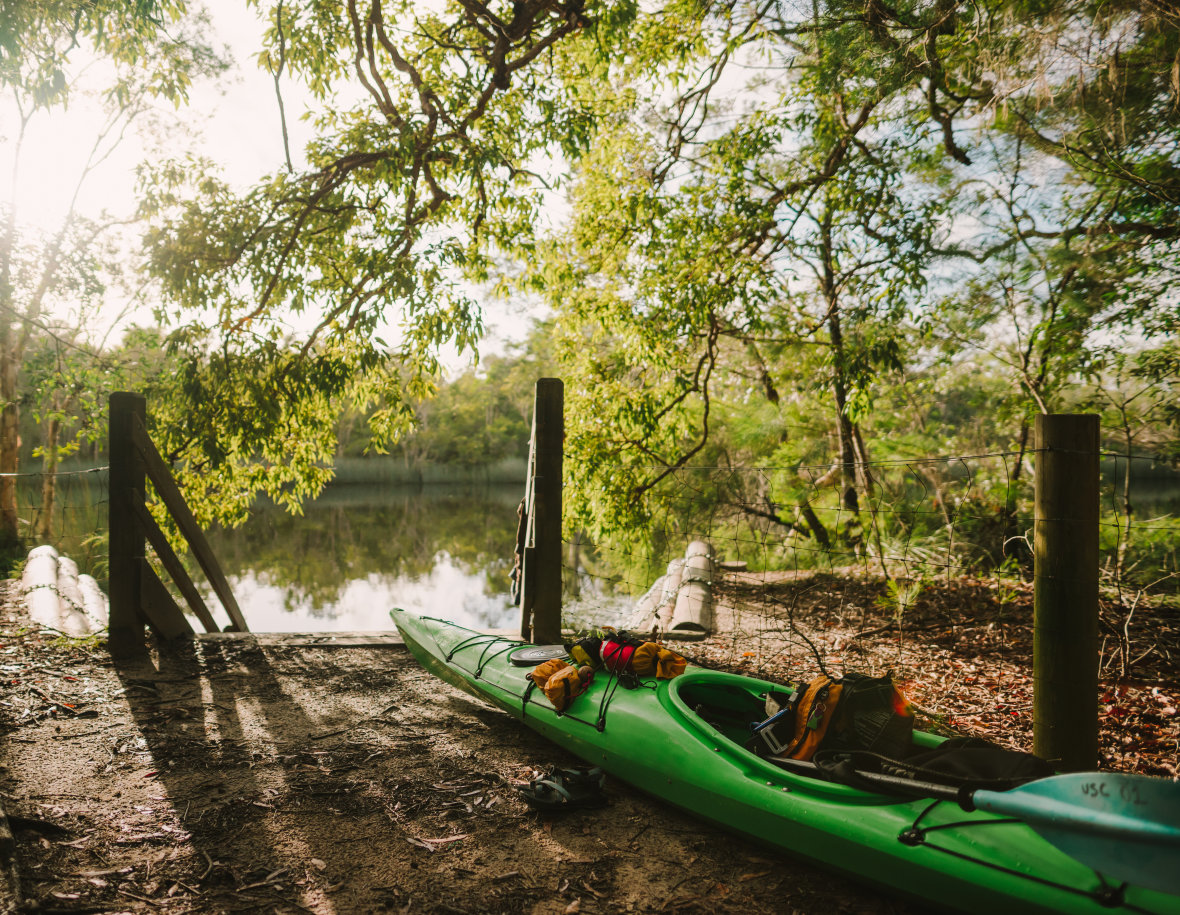
Yes, and it’s well worth it if you’ve got the time. Noosa Everglades camping offers the chance to fall asleep under the stars and wake up to the sounds of the river. The most popular options are Boreen Point Campground and Habitat Noosa Eco Camp, both offering powered and unpowered waterfront sites just a short distance from the Everglades entrance.
For something more rustic, Harry’s Hut camping area sits further upriver. It’s a little more off the grid, but perfect if you want that true wilderness feel. That said, it is only available to those who’ve booked in advance and hold the correct camping permits, so be sure to book ahead if you want to snag a spot!
How to get to Noosa Everglades
From Brisbane, the Everglades are about 120 km north, or roughly a two-hour drive. Take exit 237 off the Bruce Highway towards Pomona and Kin Kin, then follow signs to Boreen Point (the main gateway to the waterways).
If you’re already in Noosa, the Everglades are just a scenic 30-minute drive via Tewantin, through stretches of pine and eucalyptus forest, until you arrive at the access points for cruises, kayaking, or camping.
Best time to visit Noosa Everglades
Best time of year to visit: Mid-autumn through winter (April–August) is widely considered the most comfortable time to explore the area. Temperatures are mild, humidity is low, and the skies are clear, which is perfect for kayaking or hiking without breaking too much of a sweat. Summers (December–February) are hot, humid, and wet, so while the forest looks lush and green, it can be less pleasant for long outdoor activities.
Best time of the day to visit: Sunrise and sunset are unbeatable. These golden hours transform the waterways into glowing mirrors, with the reflections at their most dramatic. Early mornings are also ideal for spotting wildlife before the day heats up.
Weather at Noosa Everglades
The Noosa Everglades are one of those rare spots you can enjoy year-round, thanks to Queensland’s mild, subtropical climate. Summers (December–February) are hot and humid, with temperatures sitting between 21–29°C. Afternoon storms are common, but they keep the forest green and the riverbanks buzzing with birdlife.
Autumn and winter (April–August) are often considered the best seasons to visit. Days are dry, sunny, and pleasantly cool, with highs from 18–24°C, which is perfect weather for paddling, hiking, or simply taking in the views without feeling like you’ve stepped into a sauna. Even in mid-winter, the days are warm enough to spend hours outdoors, though mornings can be crisp. Spring (September–November) warms up again, bringing bursts of wildflowers and plenty of wildlife activity along the river.
Essentially, you can’t really go wrong; just plan your trip around whether you prefer lush, storm-fed greenery in the summer or crisp, golden mornings in the cooler months.
Best place to park your campervan at Noosa Everglades
If you’re exploring the Everglades in a campervan, you’ll want a base that puts you right on the water’s edge. The Boreen Point Campground is a classic choice, set right by Lake Cootharaba. It has powered and unpowered sites, toilets, showers, and easy access to the water for swimming, paddling, or just a morning cuppa with a view.
For something a little more eco-focused, the Habitat Noosa Everglades Eco Camp ups the game with a mix of powered sites, unpowered bush camping, and even glamping options if you’re keen on a touch of comfort. It’s also the launch point for several guided Noosa Everglades tours and kayak trips, which means you can roll straight from your camper into a full day of exploring.
Both spots give you the convenience of parking up close to the action, so you can spend less time worrying about logistics and more time soaking in the stillness and beauty of the Everglades.
Road trips that pass through