.jpg)



Join thousands of fellow campervan travellers
Sign up for our Britz newsletter to receive inspirational travel content and awesome deals, and we'll send you a copy of our Ultimate RV guide!
Thanks
Please confirm subscription in your email.
Why do people go to Noosa National Park?
People visit Noosa National Park for the chance to experience some of the best natural attractions on the Sunshine Coast without straying far from civilisation. Noosa National Park walking tracks wind through lush rainforest and open heath, leading to headlands with unmatched views overlooking the Pacific. The Coastal Walk, however, is the star attraction, offering sweeping vistas and the chance to see migrating whales in winter.
Wildlife spotting is another big drawcard for Noosa National Park. Koalas are regularly seen in the eucalypt trees near the start of the track, while dolphins often play in the surf below the cliffs. Birdwatchers will love the variety of species flitting through the forest, and lucky visitors might even catch a glimpse of a goanna sunning itself on the trunk of a nearby tree. Add in the park’s beaches (Tea Tree Bay, Granite Bay, and Alexandria Bay) and you’ve got a mix of relaxation and adventure that makes this such a popular stop.
How long should I spend at Noosa National Park?
If you’re short on time, 1–2 hours is enough to wander along the coastal boardwalk, enjoy a swim at Tea Tree Bay, or squeeze in some quick wildlife spotting. For a more rounded visit, set aside half a day (3–5 hours). That gives you time to walk the Coastal Walk out to Hell’s Gates, stop for a picnic, and take a dip at one of the tucked-away beaches.
That said, many travellers choose to dedicate a whole day to the park, using it as their base for hiking, swimming, surfing, and enjoying the headland’s laid-back vibe. The trails and lookouts are the main draw, but it’s also a perfect excuse to slow down and simply enjoy a little slice of Aussie beachside bliss.
How long is the walk around Noosa National Park?
The main highlight here is the Noosa Coastal Walk: a 10.8 km return route from Noosa Heads to Sunshine Beach. At a relaxed pace, the full walk takes 3–4 hours, but most people stop at Tea Tree Bay, Dolphin Point, or Hell’s Gates for shorter versions of the walk, so it really depends on how you do it:
-
Tea Tree Bay is just a 10–15 minute stroll from the entrance, making it perfect for a quick swim.
-
Dolphin Point takes around 30 minutes and gives you a great chance to spot dolphins.
-
Hell’s Gates is about 1.5–2 hours return and rewards you with sweeping cliff-top views.
How to get to Noosa National Park
From Brisbane, it’s about a 2-hour drive north (150 km). Take the Bruce Highway (M1) before turning off towards Noosa Heads. Once you reach town, follow Hastings Street east and continue along Park Road until you hit the main car park at the park entrance. If you’re already in Noosa, the park is right on your doorstep, and the boardwalk along Hastings Street will take you straight there.
Best time to visit Noosa National Park
Best time of year to visit: Autumn (March–May) and spring (September–November) are ideal times to soak up the Noosa National Park coastal scenery, with mild temperatures, lower humidity, and fewer crowds than peak summer. Winter (June–August) is another fantastic time, especially for spotting migrating humpback whales from the headlands. Summer can be hot and busy, but the beaches offer plenty of spots to cool off. That said, if you want to skip the crowds, you may want to avoid Noosa National Park during school holidays and summer peak season.
Best time of the day to visit: Early mornings (7–9 am) are perfect for quieter trails, cooler temperatures, and higher chances of spotting wildlife. Late afternoons (3–5 pm) are also popular for golden-hour photography and sunset views, though trails close to Hastings Street can get busy.
Weather at Noosa National Park
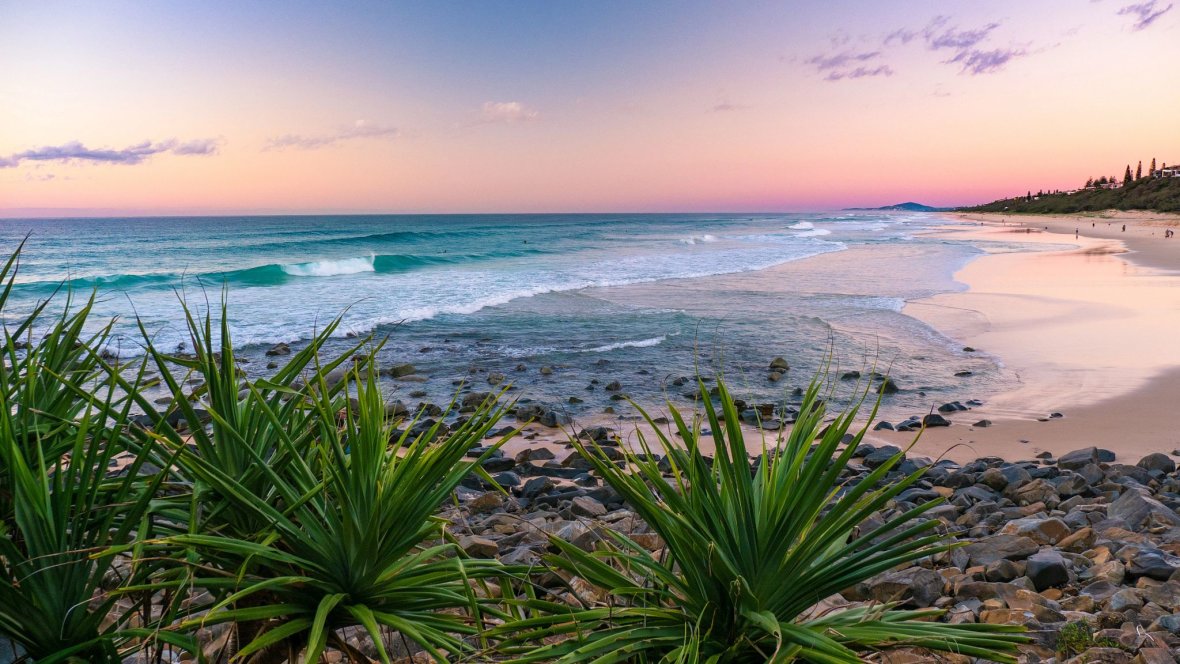
The park enjoys a subtropical climate year-round. Summers are warm and humid, with highs around 28–30°C, making beach stops extra inviting. Winters are mild and dry, with daytime highs around 20–22°C and crisp mornings. Overall, spring and autumn strike the perfect balance with pleasant mid-20s temperatures, which is ideal for long hikes and days out in the sun.
Best place to park your campervan at Noosa National Park
Parking near the headland section is the most convenient, but spaces are limited and fill quickly, especially on weekends and holidays. The main day-use car park is at the end of Park Road, right by Hastings Street, with another option at Laguna Lookout at the end of Viewland Drive.
If you’re travelling in a campervan, be aware that larger vehicles can be tricky to manoeuvre in the tight spaces. Many visitors prefer to base themselves at one of the nearby Noosa caravan parks and walk or cycle into the park, avoiding the parking stress altogether.
Road trips that pass through